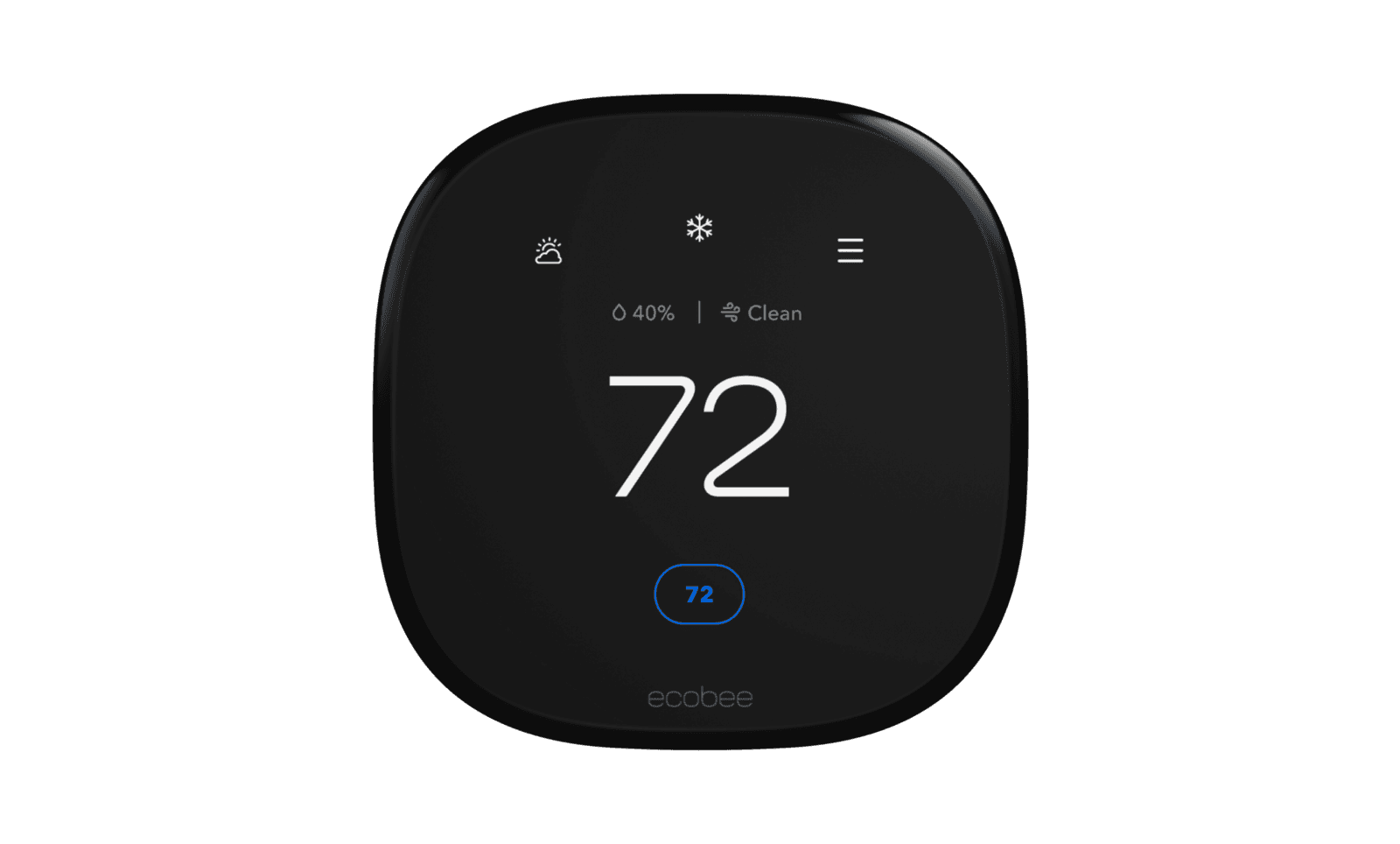
Ecobee Smart Thermostat Premium.
Premium-tier Ecobee with built-in voice assistant, included SmartSensor, and native Apple HomeKit alongside Alexa, Google Home, and SmartThings.
The Verdict.
Gavler Meta-Score
“The default smart thermostat for everyone except dedicated Google-Home loyalists. SmartSensors plus Apple HomeKit plus a $30-cheaper price than the Nest 4th Gen makes this a comfortable Editor's Choice. The only reason not to buy this is if you specifically prefer the Nest's looks or already own Nest cameras and want one app.”
The Gavler Verdict
The Gavler Review.
Ecobee Smart Thermostat Premium Review: The Ecosystem Winner
The Ecobee Smart Thermostat Premium sits at number one on our Best Smart Thermostats list with a 9.4, and the reason is almost boring in the best way: it just works, everywhere. Native Apple HomeKit, Alexa, Google Home, SmartThings, and Matter support in one thermostat is not something any competitor fully matches, and the included SmartSensor means the HVAC system responds to where you actually are rather than where the thermostat happens to be mounted on the wall. At $259 it's also cheaper than the closest premium rival. Buy it unless you specifically prefer the Nest's design language or you're already locked into an all-Nest camera setup. For nearly everyone else, this is the sensible default.
What it actually is
The Premium is Ecobee's flagship thermostat, and the headline feature is the one buyers most underweight until they need it: native Apple HomeKit support. Most smart thermostats treat HomeKit as an afterthought or skip it entirely; the Premium builds it in alongside Alexa, Google Home, SmartThings, and Matter, which means it's one of the only thermostats on the market that doesn't force a household to standardize on a single smart-home platform.
It ships with one Ecobee SmartSensor in the box — a small battery-powered sensor you place in a room other than the one the thermostat is mounted in. That sensor reads temperature and occupancy, and the thermostat averages across both readings instead of trusting the single spot it happens to be drilled into. It's a genuinely different HVAC behavior, not a cosmetic upgrade.
The built-in speaker is the feature reviewers and buyers are split on. It works as an Alexa endpoint, and Ecobee doesn't charge a meaningful premium for including it — so even buyers who consider it a gimmick generally shrug and accept it rather than avoid the thermostat over it.
In use
Setup runs through a glass color touchscreen with an ambient light sensor, and power comes from either an existing C-wire or the included Power Extender Kit (PEK) — a part that roughly 30 percent of U.S. homes lack the wiring for, and that costs $25-30 separately from many competitors. Including it in the box is a small line item that adds up to real value for a meaningful share of buyers.
The multi-room sensing is where the Premium separates itself in daily use. Tom's Guide's testing zeroed in on exactly this: "multi-room sensor averaging ensures the HVAC responds to actual occupied spaces rather than the single thermostat location." That's the difference between a thermostat that cools an empty hallway and one that cools the room you're actually sitting in. Reviewed went further on the ecosystem question specifically, calling it "the best HomeKit-compatible smart thermostat available in 2026" — a category where genuine competition is thin.
Where it shines
- Ecosystem coverage nothing else matches. HomeKit, Alexa, Google Home, SmartThings, and Matter in one device means the Premium is the rare thermostat that doesn't force a household to pick a smart-home camp. Smart Home Explorer summarized it as standing out "as the more practical and versatile choice for most homeowners."
- Multi-room sensing included, not upsold. The SmartSensor in the box is a genuine functional upgrade, not a checkbox — it changes how the HVAC actually behaves day to day.
- The PEK removes a hidden cost. For the roughly 30% of homes without a C-wire, the included Power Extender Kit closes a gap that competitors often leave as a separate purchase.
The trade-offs — who should skip it
This is the most broadly compatible thermostat on the list, not the prettiest, and the honest reasons to buy something else are specific:
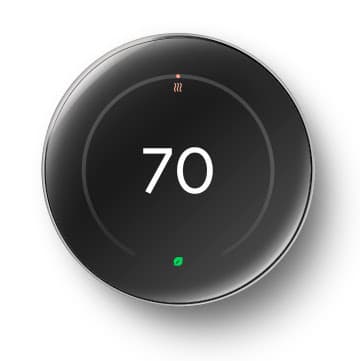
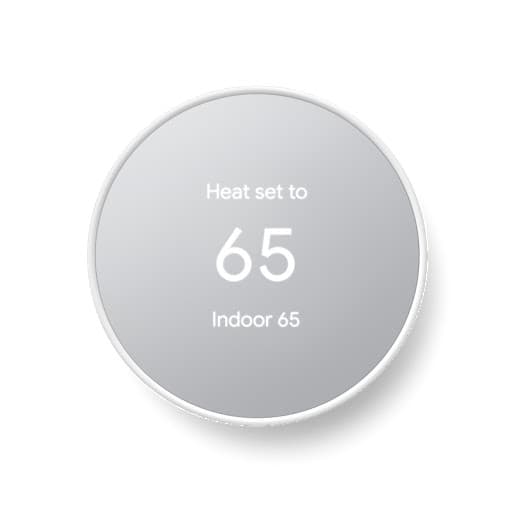
- You care about how it looks on the wall. The Premium's flat-panel design is competent, not iconic. If the thermostat sits somewhere visible and matters as an object in the room — a kitchen, a main hallway — the Nest Learning Thermostat 4th Gen at number two has the more distinctive circular glass design that some buyers will pay the price gap for.
- You're all-in on Nest hardware already. If your home already runs Nest cameras and speakers, keeping everything in one Google app has real convenience value that the Ecobee's broader-but-separate ecosystem support doesn't replicate.
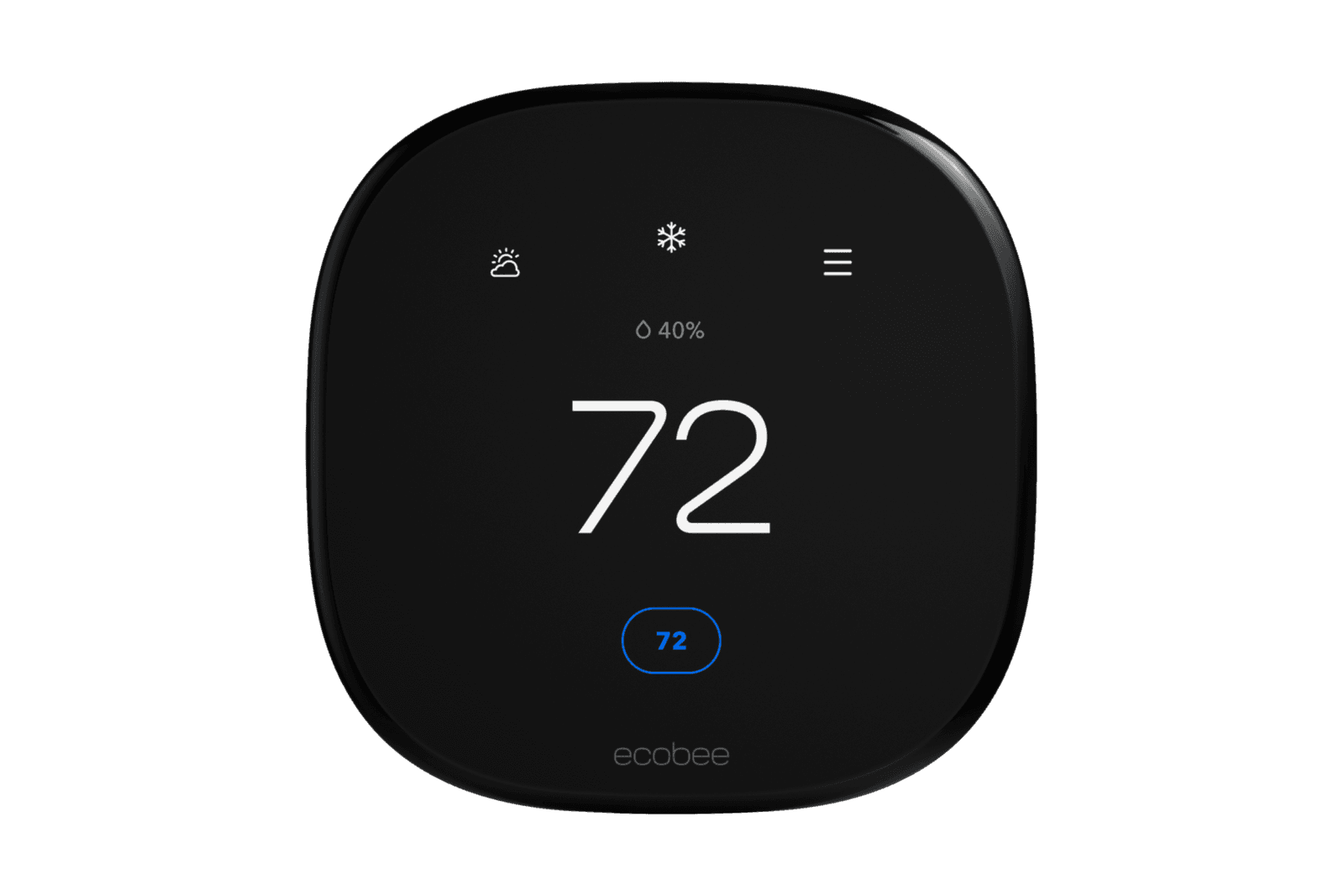
- You don't want the built-in speaker. It doesn't cost extra, but it's there whether you use it or not. If a speaker-free thermostat matters to you, the step-down Ecobee Smart Thermostat Enhanced is the same-brand, lower-cost alternative worth comparing against.
How it compares
On its own list, the Premium's closest rivals sit right behind it. The Nest Learning Thermostat 4th Gen at number two is the direct cross-shop for buyers who weight design and Google-ecosystem depth over multi-platform breadth — and it costs about $30 more. The Ecobee Smart Thermostat Enhanced at number three is the same-brand, lower-cost sibling for buyers who want Ecobee's platform breadth without paying for the built-in speaker or, depending on configuration, the included sensor.
The Premium's case isn't that it wins every category outright — the Nest is the better-looking object, the Enhanced is the cheaper Ecobee — but that it's the safest, most future-proof pick for a household that doesn't want to bet its whole smart-home setup on one company's ecosystem.
The Gavler verdict
A 9.4, with an expert consensus of 95 against a community score of 92 — a gap that traces almost entirely to opinions on the built-in speaker, not to the thermostat's core performance. The Ecobee Smart Thermostat Premium earns the top spot on Gavler's list by being the thermostat that works everywhere, senses more of the house than the wall it's mounted on, and includes the parts competitors often sell separately. Buy it as the default. The only buyers who should look elsewhere are the ones chasing the Nest's design or already committed to an all-Google-hardware home — and those are narrow, specific reasons, not broad ones.
Common Questions
For most homes, yes. It ranks first on Gavler's Best Smart Thermostats list with a 9.4, and the case is ecosystem breadth: it's one of the only thermostats with native Apple HomeKit alongside Alexa, Google Home, SmartThings, and Matter, and it ships with a SmartSensor that most competitors charge extra for. At 259 dollars it also undercuts the Nest Learning Thermostat 4th Gen by about 30 dollars. The main caveat is the built-in speaker, which some buyers find unnecessary.
Buy the Ecobee if you want the widest smart-home compatibility, a room sensor included in the box, and a lower price. Buy the Nest if the thermostat is somewhere you look at constantly and its circular glass design matters to you, or if you're already deep in the Nest camera and speaker ecosystem and want everything in one app. The Ecobee wins on substance and breadth; the Nest wins on looks and single-ecosystem simplicity.
Ideally, yes, but it's not a dealbreaker. The Premium ships with a Power Extender Kit (PEK) in the box — a part that roughly 30 percent of U.S. homes without a C-wire need, and that many competitors charge separately for. That inclusion is a meaningful, easy-to-miss piece of the value equation.
It lets the thermostat average temperature and occupancy across more than one room instead of only reading the hallway or entryway where the thermostat itself is mounted. In practice that means the HVAC system responds to where people actually are sitting, rather than to whatever spot the thermostat happened to be wired into — a real behavioral improvement, not just a spec-sheet bullet.
Where to Buy.
Prices checked regularly
90-day price history
Price History
Tracked at $249 across 91 tracked days — currently $259 at the retailers above.
Tracked daily across retailers. Vote Want itabove and we’ll alert you the moment the price drops.
Some links are affiliate links — Gavler may earn a commission. This never affects rankings or scores. Learn more.
Precision Engineering
Included SmartSensor
Ships with one room sensor that lets the thermostat average temperature across rooms instead of relying solely on the wall location.
Native Apple HomeKit + Built-in Speaker
One of the only thermostats with first-class HomeKit + Siri, plus a built-in speaker that doubles as an Alexa endpoint.
Multi-Ecosystem (Matter, HomeKit, Alexa, Google, SmartThings)
Works natively with every major smart-home platform — no other consumer thermostat covers this many ecosystems.
Technical Specifications
The Scoreboard
The most-recommended smart thermostat across Wirecutter, Tom's Guide, Reviewed, and SafeWise 2026 roundups. Community scores reflect a small contingent who find the built-in speaker unnecessary.
Cast Your Vote
Do you think Ecobee Smart Thermostat Premium deserves the #1 spot in Best Smart Thermostats?
Global Critique
“The Ecobee Premium stands out as the more practical and versatile choice for most homeowners.”
“The best HomeKit-compatible smart thermostat available in 2026.”
“Multi-room sensor averaging ensures the HVAC responds to actual occupied spaces rather than the single thermostat location.”
More from Best Smart Thermostats.
See how other top picks compare in this category.
24V vs Line-Voltage: Check This Before a Smart Thermostat
Ecosystem hangtags are the wrong first question. 24V vs line-voltage is the wiring. Then pick the product in that lane.
Ecobee Smart Thermostat Premium vs Nest Learning Thermostat (4th Gen): The Smart Thermostat Decision That Actually Matters in 2026
The two smart thermostats every homeowner cross-shops. Here's how the Ecobee Premium and Nest Learning 4th Gen compare in 2026.