Breville Barista Express Impress vs Gaggia Classic Evo Pro: All-in-One Convenience or Purist's Perfection?
Breville's all-in-one Barista Express Impress vs Gaggia's purist Classic Evo Pro — the decision that shapes the next decade of your home espresso life.
Published April 2026, refreshed June 2026 — Father's Day is T-5, Amazon Prime Day is T-7. Below: how the Breville Barista Express Impress and the Gaggia Classic Evo Pro — the top all-in-one and the top purist's pick on Gavler's Best Espresso Machines list — actually compare for someone buying their first or second home espresso machine in 2026.
The Breville Barista Express Impress and the Gaggia Classic Evo Pro represent the two dominant schools of thought in home espresso. One believes the machine should do the hard work for you. The other believes the hard work is the point. They sit at rank 1 and rank 4 on Gavler's Best Espresso Machines list, and people who love one tend to have strong opinions about the other.
What's Changed in 2026
Three meaningful shifts since this comparison first ran in April:
- The entry-prosumer single-boiler segment filled in around the Gaggia. The Profitec Go at $800 brings a PID-controlled brew temperature and adjustable OPV on a German-built 58mm chassis — close enough to the Gaggia's workflow that the Gaggia is no longer the only obvious answer in this slot. The Lelit Anna PL41TEM at $569 sits below it. Neither is on Gavler's top 10 yet (the Breville Bambino Plus at rank 8 and Rancilio Silvia Pro X at rank 7 currently absorb the slots) — but both are legitimate cross-shop options that did not exist in their current form a year ago.
- Father's Day discount window is wider than Prime Day for espresso machines. The Breville Barista Express Impress has historically hit $649-$699 during Father's Day — about a 20-25 percent cut from $800 list — and Amazon, Best Buy, and Breville's own store all participate. Prime Day adds maybe another $20-$30 off the same machine. The Gaggia discounts less reliably; Whole Latte Love and Clive Coffee both open Father's Day windows but the cut is typically 5-10 percent and rarely improves during Prime Day.
- Grinder pricing finally caught up. The Eureka Mignon Notte ($429), DF54 ($349), and Baratza Sette 270 ($379) all sit firmly in the "capable espresso grinder" tier under $500 — which means the Gaggia's "you need a separate grinder" gotcha is no longer a $700 add-on. The total system cost for Gaggia + DF54 lands around $848, genuinely competitive with Breville on price while delivering a meaningfully better grinder.
The Case for the Breville Barista Express Impress ($800)
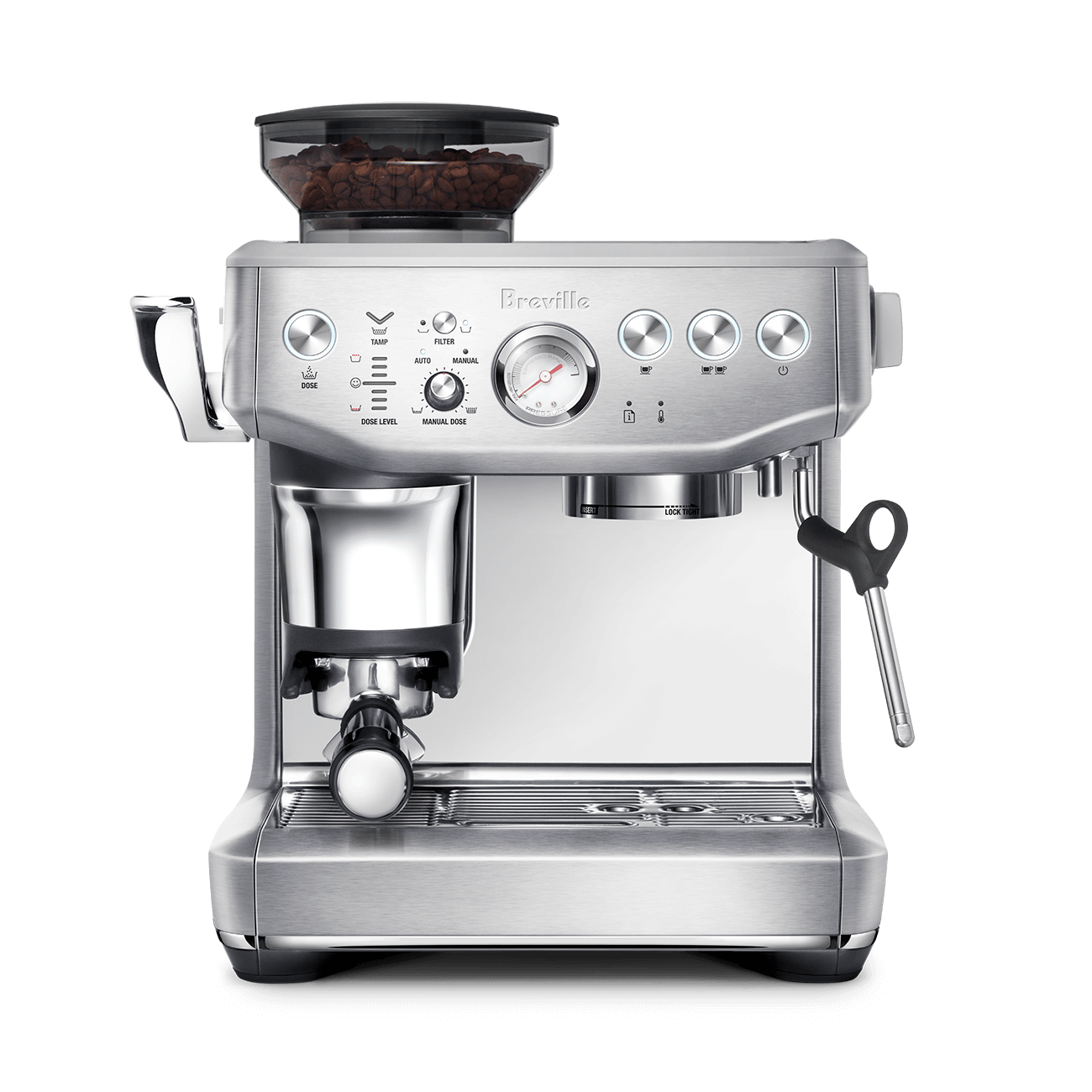
Breville Barista Express Impress
Integrated grinder, intelligent tamping, and PID temperature control make cafe-quality espresso approachable.
Amazon affiliate · price subject to change
The Barista Express Impress is the best all-in-one espresso machine for people who want great coffee without a separate grinder, a tamping station, and a six-month learning curve. The integrated conical burr grinder doses directly into the portafilter. The Impress system — Breville's assisted tamping mechanism — applies consistent 22 lb pressure every time, eliminating one of the biggest variables in espresso extraction. PID temperature control keeps the boiler within 1 degree of target. The 54mm portafilter is the company's standard.
The result: drinkable espresso on day one, good espresso within a week, and genuinely impressive shots within a month. For a household where multiple people make coffee and not everyone wants to master extraction theory, the Breville is the machine that actually gets used. The steam wand handles milk competently for cappuccinos and lattes — not at La Marzocco quality, but better than every other sub-$1,000 all-in-one.
The trade-offs are real. The 54mm portafilter limits basket and accessory options compared to the industry-standard 58mm. The built-in grinder is good but not great — serious enthusiasts will eventually want to upgrade, at which point the integrated grinder becomes dead weight. And at $800, you are paying a premium for the convenience features, not the pure espresso quality.
The Case for the Gaggia Classic Evo Pro ($499)
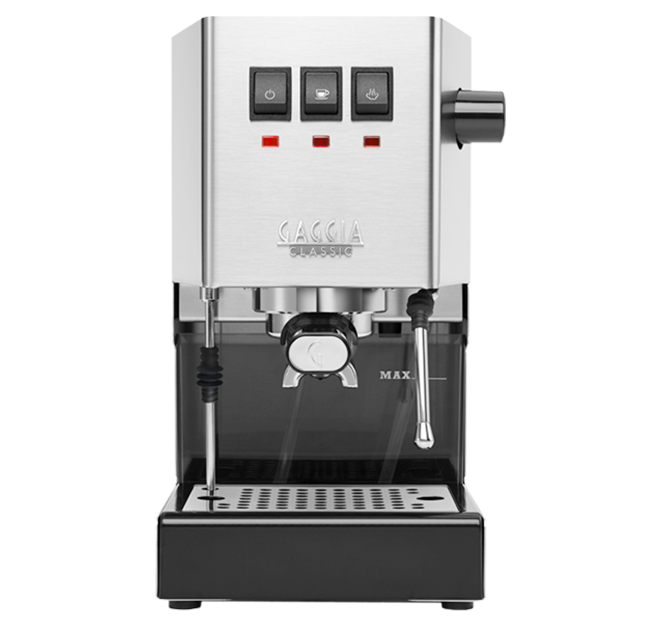
Gaggia Classic Evo Pro
Commercial-grade 58mm portafilter and brass boiler deliver honest, traditional espresso. Built to last decades.
Amazon affiliate · price subject to change
The Gaggia Classic Evo Pro is a 58mm commercial-grade portafilter bolted to a brass boiler with a 9-bar OPV. That is it. That is the machine. And that simplicity is exactly the point.
With a proper grinder in front of it, the Gaggia pulls shots that compete with machines costing three times as much. The 58mm portafilter means access to every aftermarket basket, distribution tool, and tamper in the industry — IMS competition baskets, Pesado tampers, Normcore puck screens. The brass boiler group provides excellent heat stability for back-to-back shots. And because there are so few things to break, Gaggias routinely last 15-20 years with nothing more than regular backflushing and occasional gasket replacement.
The mod community is the Gaggia's secret weapon. A $20 spring swap changes the OPV to any pressure you want. A PID kit adds temperature control for under $100. A 9-bar dimmer mod enables pressure profiling. The Gaggia grows with you in a way no all-in-one machine can.
The trade-offs: the learning curve is real. You need a separate grinder (add $350-$500 for a capable espresso grinder). There are no programmable shots — you flip the switch on and off manually. Steam power is adequate but not fast. This is not the machine for someone who wants great espresso with minimal effort.
The Cheaper Single-Boiler Wildcard — Lelit Anna PL41TEM ($569)
The Lelit Anna PL41TEM is the most under-discussed machine in the entry-prosumer segment. PID-controlled brew temperature, 57mm portafilter, vibratory pump, single boiler — same architecture as the Gaggia with two real upgrades: the PID is built in (no aftermarket kit needed) and the boiler heat-up time is faster. The Anna sits below the Gaggia in price by about $70 and below the Breville by over $200. The trade-off is the 57mm portafilter, which has a much smaller accessory ecosystem than the Gaggia's 58mm. For a buyer who specifically wants PID-controlled temperature on a single-boiler pump machine at the lowest price, the Anna deserves a look — it is not currently on Gavler's top 10, but it is the cheapest legitimate Gaggia competitor.
What to Actually Care About
Most spec comparisons miss the point. The decision tree is short:
- First espresso machine, no separate grinder budget? Breville Barista Express Impress. The integrated grinder is the only way to make great espresso under $1,000 in a single purchase.
- First espresso machine, willing to buy a separate grinder? Gaggia Classic Evo Pro + DF54 ($349) or Eureka Mignon Notte ($429). Total system $848-$928, meaningfully better extraction.
- Already own a capable espresso grinder? Gaggia. The 58mm portafilter and 9-bar OPV are the upgrade path.
- Multiple people in the household, not all coffee nerds? Breville. Programmable shot buttons mean anyone can make a drinkable cup.
- Plan to ride the upgrade ladder over years? Gaggia. The 58mm ecosystem is where the upgrade path lives — pressure profiling mods, IMS baskets, dual-boiler step-ups (Rancilio Silvia Pro X, Lelit Bianca V3).
- Want PID on a single-boiler at the cheapest possible price? Lelit Anna PL41TEM. The Gaggia needs an aftermarket PID kit; the Anna ships with one.
- Want cappuccino or latte focus, not straight espresso? Either works. Breville's wand is friendlier for new users; Gaggia's wand is faster once you can stretch milk properly.
Father's Day & Prime Day Buying Window — T-5 / T-7
Father's Day lands June 21 and Prime Day runs June 23-26 this year. The Breville Barista Express Impress historically discounts to $649-$699 during Father's Day at Amazon, Best Buy, and Breville's own store — and Prime Day typically adds another $20-$30 off. The Gaggia Classic Evo Pro discounts less reliably — Whole Latte Love opens a Father's Day window with $50-$75 off the body alone, and Clive Coffee bundles the Gaggia with a Eureka Mignon Notte grinder at a 10-12 percent kit discount during the same window. Espresso accessories (WDT tools, Normcore puck screens, Pesado tampers, naked portafilters, scales) deal much more aggressively than machines themselves during Prime Day — typically 25-35 percent off via small-brand listings.
If the budget is firm and you want the best deal, time the Breville purchase to Prime Day. If you want the Gaggia and a grinder together, the Father's Day kit bundle at Clive Coffee is the better play and beats anything Amazon will do on the same combination.
The Verdict
Buy the Breville Barista Express Impress if you want great espresso with the least possible friction, do not want to buy a separate grinder, or share the machine with people who are not interested in the hobby. It is the most complete package under $1,000 and the only honest single-purchase pick.
Buy the Gaggia Classic Evo Pro if you are serious about espresso as a craft, plan to invest in a quality grinder, and want a machine that rewards skill development for the next decade. The total system cost approaches the Breville's once you add a grinder, but you get a better grinder and a more capable extraction platform — and the 15-20 year service life means the long-term cost-per-shot is the lowest in the category.
Buy the Lelit Anna PL41TEM instead if you want PID-controlled temperature on a single-boiler at the cheapest price and you can live with the smaller 57mm accessory ecosystem.
The Gavler community favors the Breville's accessibility — 9.5 versus 8.8 score. But the Gaggia's 34 votes to the Breville's 24 tell a different story: the people who love the Gaggia really love it. See where both stand among the ten top picks on the Best Espresso Machines list and weigh in.
See all 10 products ranked by the community
Best Espresso Machines
See Full Rankings →336 community votes cast
Common Questions
It depends on experience level and how involved you want to be. The Breville is better for beginners and anyone who values convenience — the integrated conical burr grinder, assisted Impress tamping, and programmable shot volumes mean great espresso with a minimal learning curve. The Gaggia is better for enthusiasts who want full manual control, plan to invest in a separate grinder, and value a 58mm commercial portafilter on a machine that rewards technique with exceptional results.
Yes. The Gaggia does not include a grinder, so budget for one separately. A capable entry-level espresso grinder like the Eureka Mignon Notte, Baratza Sette 270, or DF54 costs $250-$450. This pushes the total system investment closer to the Breville's price — but you get a better grinder than the integrated one inside the Breville, and the grinder is the single most important variable in espresso quality.
The Breville Barista Express Impress is significantly more beginner-friendly. The intelligent dosing system guides you to the right grind amount, the Impress assisted tamping mechanism applies consistent 22 lb pressure, and the programmable shot buttons let you walk away during extraction. The Gaggia requires you to manage every variable — grind, dose, tamp, time — yourself. Brilliant once mastered, frustrating for the first month.
The Gaggia Classic Evo Pro has a well-earned reputation for lasting 15-20 years with basic maintenance. The simple brass boiler design is easy to repair, and a massive mod community keeps parts and upgrades flowing — OPV swaps, PID kits, pressure-profiling dimmer mods. The Breville is well-built but more complex internally, and the integrated grinder is the most likely component to need service over time. For pure longevity, Gaggia wins.
Yes if you want a single-boiler pump machine with a PID for under $1,000 but the Gaggia's purely-manual workflow scares you. The Profitec Go ($800) offers a PID-controlled brew temperature, adjustable OPV, and German build quality on a 58mm portafilter — the closest competitor to the Gaggia in the entry-prosumer single-boiler segment. The Lelit Anna PL41TEM ($569) brings a PID to the 57mm Lelit chassis at a price below the Gaggia and is the easiest manual pump machine to live with for beginners. Both are real alternatives, neither is on Gavler's top 10 list because the [Breville Bambino Plus](/products/breville-bambino-plus) and [Rancilio Silvia Pro X](/products/rancilio-silvia-pro-x) currently absorb the rank slots.
Father's Day yes, Prime Day moderately. The Breville Barista Express Impress historically discounts to $649-$699 during Father's Day and Prime Day windows — about a 20-25 percent cut from $800 list. The Gaggia Classic Evo Pro discounts less reliably — Whole Latte Love and Clive Coffee both open Father's Day promos but the cut is typically 5-10 percent. Espresso accessories (WDT tools, distribution mats, naked portafilters) deal more aggressively than machines themselves during Prime Day.
On Gavler's Best Espresso Machines list, the Breville Barista Express Impress holds rank 1 with a 9.5 community score, and the Gaggia Classic Evo Pro is rank 4 with an 8.8. The [De'Longhi La Specialista Arte Evo](/lists/best-espresso-machines) at rank 2 (9.2) is the other key cross-shop in this price range. Rankings are decided entirely by community votes — one person, one vote.
Products Mentioned
Jump to the full ranking and community verdict for each pick named above.
- Breville Barista Express ImpressHome & Kitchen · Best Espresso Machines
- Gaggia Classic Evo ProHome & Kitchen · Best Espresso Machines
- Breville Bambino PlusHome & Kitchen · Best Espresso Machines
- Rancilio Silvia Pro XHome & Kitchen · Best Espresso Machines
- Baratza Sette 270Home & Kitchen · Best Coffee Grinders
- Lelit Bianca V3Home & Kitchen · Best Espresso Machines