Anker Solix F3800 vs EcoFlow Delta 2 Max: How Much Backup Power Do You Actually Need?
Anker's whole-home Solix F3800 vs EcoFlow's Delta 2 Max, refreshed for Prime Day 2026. Which station fits your outage plan, your camping trip, and your budget.
Published April 2026, refreshed June 2026 — Father's Day is T-5, Amazon Prime Day is T-7. Below: how the Anker Solix F3800 and the EcoFlow Delta 2 Max actually compare for outage planning, camping, and value heading into the deepest portable-power discount window of the year.
The Anker Solix F3800 and EcoFlow Delta 2 Max sit at rank 1 and rank 4 on Gavler's Best Portable Power Stations list, and they answer fundamentally different questions. The Anker asks: what if your portable power station could replace a generator? The EcoFlow asks: what is the most useful power you can bring anywhere without breaking your back or your budget? Both answers are correct. The question is which one you are actually asking.
What's Changed in 2026
Three meaningful shifts since this comparison first ran in April:
- The EcoFlow Delta 3 Max launched late 2025 and the Delta 2 Max became the value pick by default. The Delta 3 Max carries the same 2,048Wh capacity but bumps continuous output from 2,000W to 2,400W, cuts 0-80% recharge time to about 68 minutes, and improves UPS switchover from 30ms to 10ms. Meaningful upgrades — but the Delta 2 Max stays in production at a sharper discount, and the gen-2 chassis is roughly 4 pounds heavier than the gen-3. For buyers who want the best dollars-per-watt-hour, the Delta 2 Max is now the obvious pick over its successor.
- Anker held the F3800 at $1,799 for nearly the entire first half of 2026. The list price is still $3,999 but the actual purchase price has stabilized at $1,799 across Anker's own store and Amazon — a permanent-feeling 55 percent discount. Anker is now starting Prime promos on its own store about a week before Amazon's window opens, which matters if you do not have a Prime membership.
- Prime Day 2026 is T-7 and Father's Day is T-5. Amazon confirmed June 23-26 as the four-day Prime Day window. Portable power stations are reliably one of the deepest-discount categories — the Delta 2 Max hit $901 during Prime Day 2025 (a 47 percent cut) and historically dips again in this window. The F3800 is more discount-resistant but typically lands around $1,799-$1,999. EcoFlow, Anker, Bluetti, and Jackery all participate; Goal Zero participates lightly. Timing the purchase against the calendar is worth $300-$800 on either station.
The Case for the Anker Solix F3800 ($1,799 street, $3,999 list)
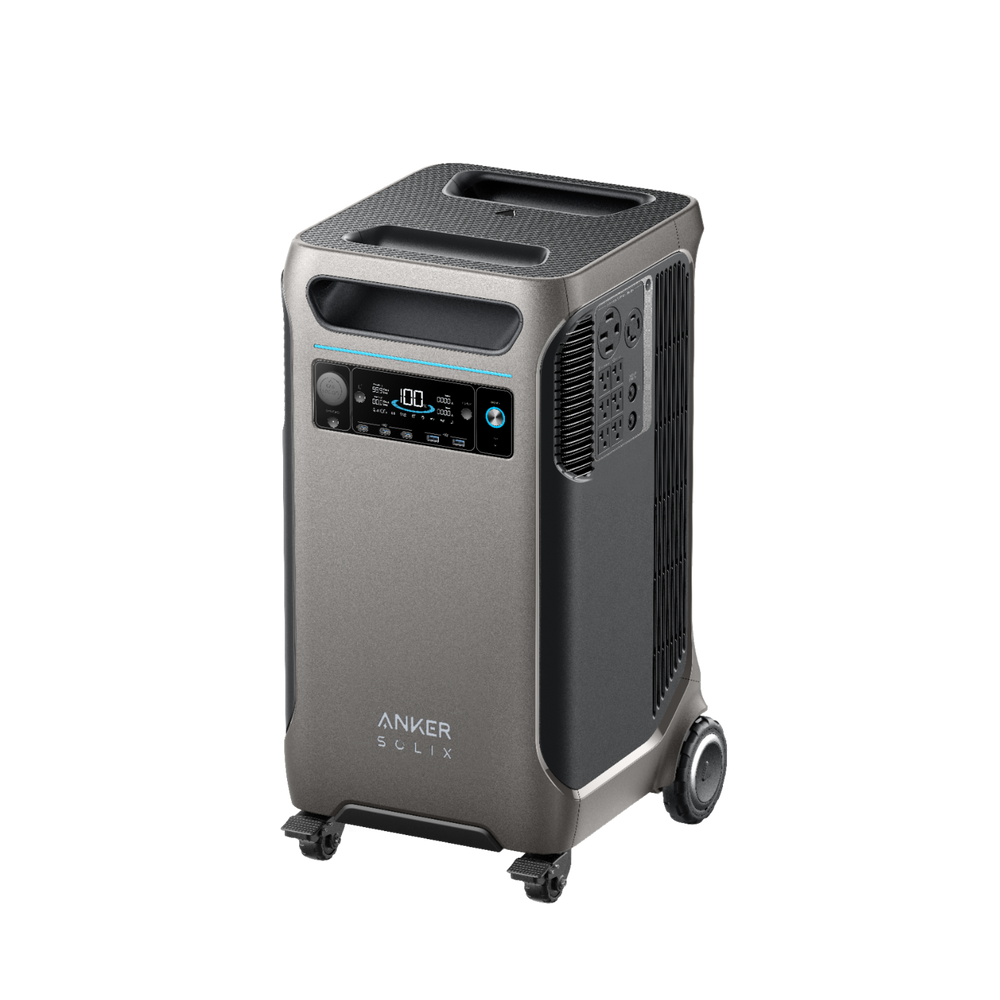
Anker Solix F3800
Expandable 3,840Wh whole-home backup with 6,000W output and dual voltage support. The premium option for serious power needs and extended independence.
The F3800 is barely "portable" in the traditional sense — and that is the point. At 3,840Wh with 6,000W continuous output, this is a home backup system that happens to be battery-powered. It runs 120V and 240V split-phase, meaning it can power circuits most portable stations cannot touch: central air handlers, well pumps, electric dryers, EV chargers. During an extended outage, the F3800 keeps the household running, not just the phones charged.
Expandability pushes it further. Stack additional battery modules to reach 26.9kWh — enough to run an average American home for over a day without solar input. Add panels (up to 2,400W solar input across dual 60V inputs) and you have a self-sustaining system that can theoretically run indefinitely in good conditions. The LiFePO4 chemistry is rated for 3,000+ cycles to 80 percent capacity, which translates to a decade-plus of regular use.
The trade-offs are weight, footprint, and overkill risk. It weighs 132 pounds. It costs twice as much as the Delta 2 Max even at street price. And if the actual use case is camping trips and tailgates, you are hauling an enormous amount of capacity you will never touch. The tower-style form factor is less stable than a traditional suitcase design.
The Case for the EcoFlow Delta 2 Max ($899 street, $1,699 list)
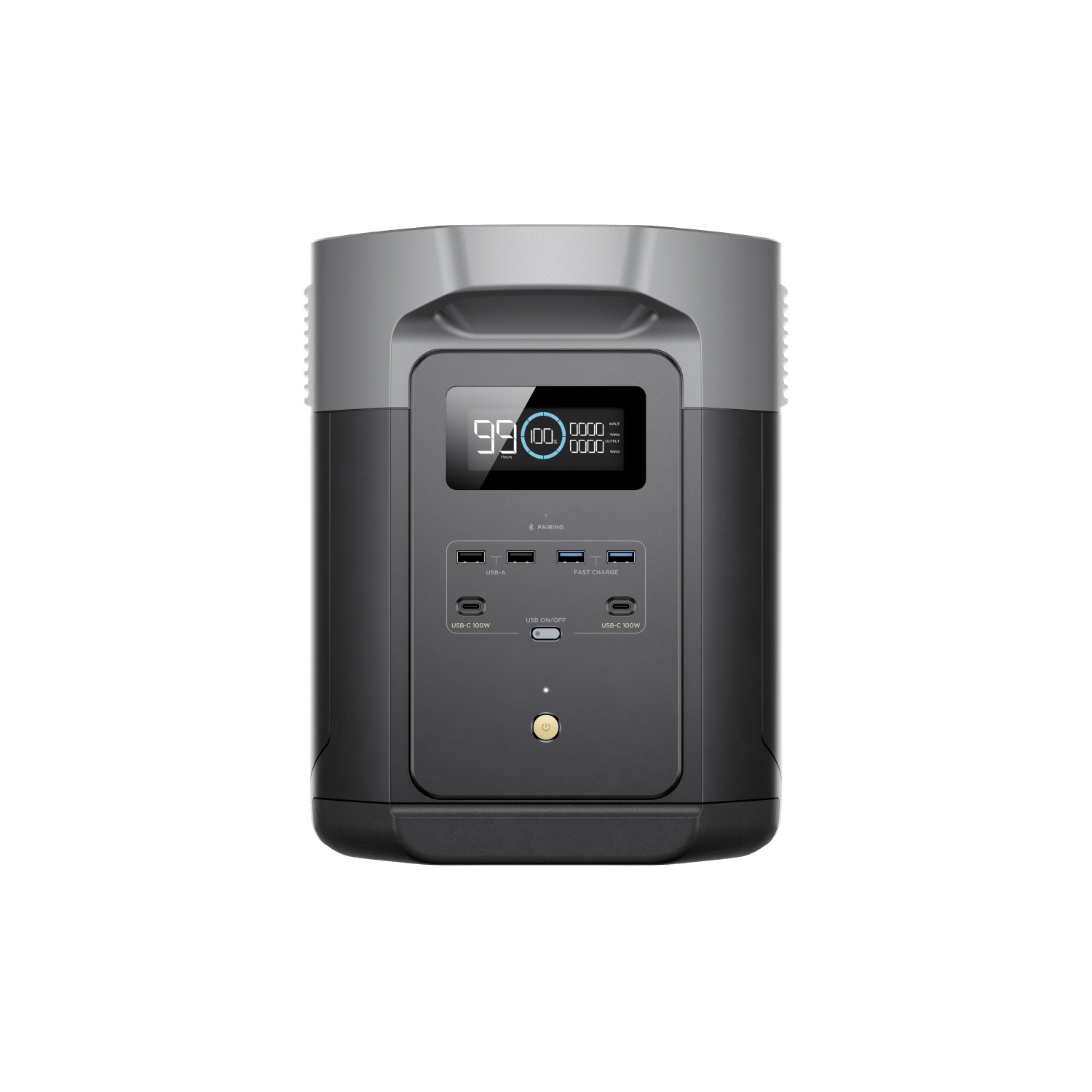
EcoFlow Delta 2 Max
2,048Wh LFP system with expandable architecture and 2,400W output. Serious power for extended off-grid work and home backup.
Amazon affiliate · price subject to change
The Delta 2 Max hits the sweet spot most people actually need. At 2,048Wh with 2,000W continuous output (4,800W X-Boost surge), it runs a full-size refrigerator for roughly 17 hours, powers a CPAP machine for a week, or keeps a remote workstation running for days. It is expandable to 6,144Wh with extra batteries. At roughly 50 pounds, one person can move it without help.
The EcoFlow app is the most mature in the category — real-time monitoring, scheduled charging to take advantage of off-peak electricity rates, and firmware updates that have genuinely improved performance post-purchase. LFP (lithium iron phosphate) chemistry means 3,000+ cycles to 80 percent capacity — over a decade of regular use. Charge times are aggressive: 0-80 percent in about 80 minutes from AC input, and the new Delta 3 Max gen has compressed that to 68 minutes if speed matters more than dollars.
At $899 street, the Delta 2 Max is also the value leader among serious 2kWh-class stations. You get the expandable architecture, the smart app ecosystem, and enough capacity for most real scenarios at half the F3800's price.
The trade-offs: 2,400W output means you cannot run high-draw appliances simultaneously. No 120V/240V split-phase, so large HVAC systems are off the table. If you are planning for multi-day grid outages in hurricane or wildfire country, you will hit the capacity ceiling sooner than you would like.
The Mainstream Sweet-Spot Wildcard — Anker Solix C1000 Gen 2 ($470)
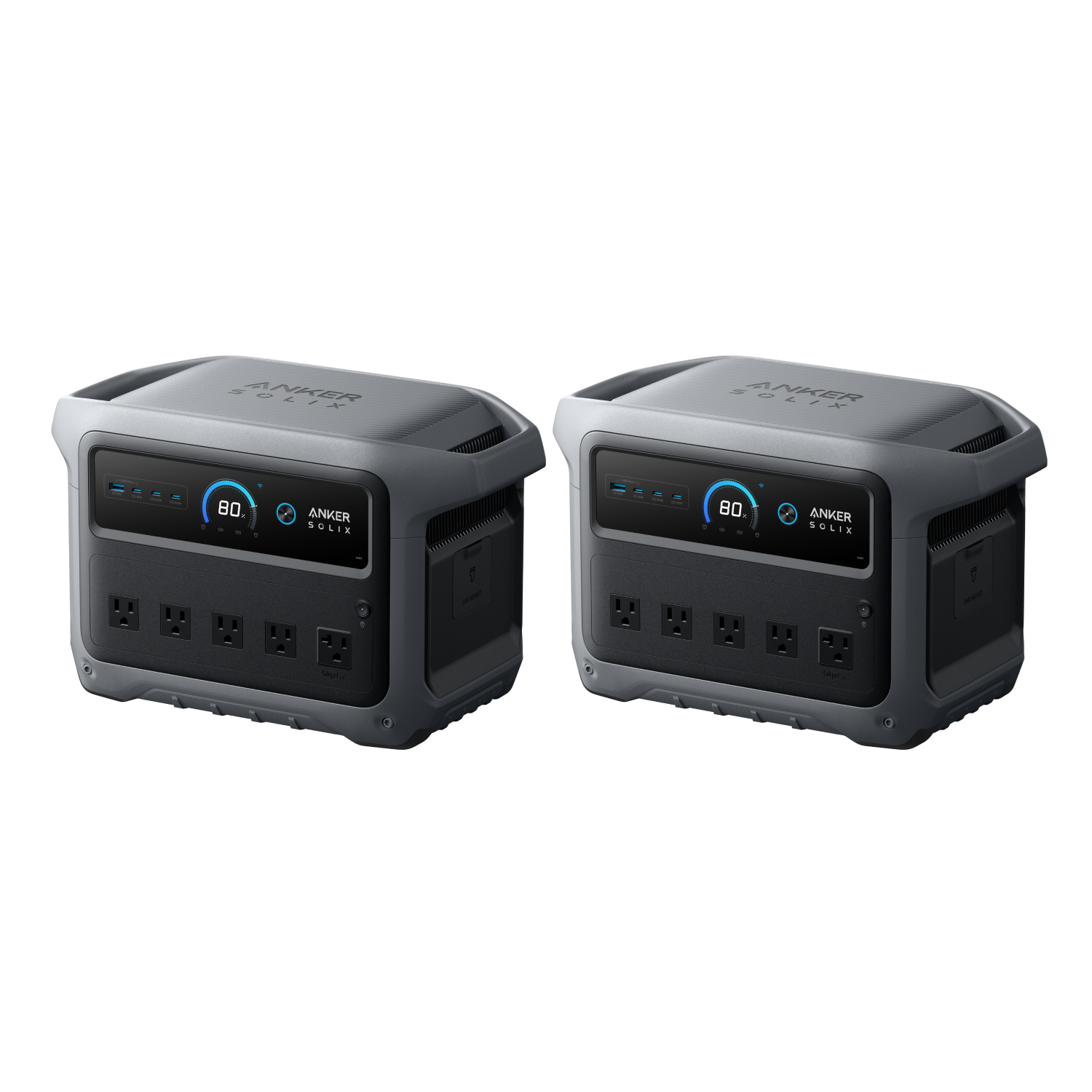
Anker Solix C1000 Gen 2
1,024Wh LiFePO4 with 2,000W output and a Guinness-certified 49-minute full recharge. The mainstream sweet-spot pick most buyers should start with.
Amazon affiliate · price subject to change
For most buyers, the honest answer is that neither the F3800 nor the Delta 2 Max is the right station. The 1kWh tier is where most real demand actually sits, and the Anker Solix C1000 Gen 2 at rank 2 on the Best Portable Power Stations list is the obvious pick: 1,024Wh, 2,000W continuous output, 10 ports, 10ms UPS switchover, Guinness-certified 49-minute full recharge from 1,600W AC input, $470 street. It covers the realistic scenarios — CPAP overnight, small fridge during a 12-hour outage, laptop and phone charging for a weekend in a cabin — at less than one-quarter of the F3800's price. If the F3800 sounds like overkill and the Delta 2 Max sounds like too much money, the C1000 Gen 2 is the cheaper sweet-spot answer.
What to Actually Care About
Most spec comparisons miss the point. The decision tree is short:
- Whole-home backup with 240V circuits? F3800. The 6,000W split-phase output is the only way to keep a central HVAC handler, well pump, or EV charger running through an outage.
- Multi-day outage in hurricane or wildfire country? F3800 with at least one expansion battery. The 7,680Wh expanded base buys you the second day.
- Camping, remote work, weekend trips? Delta 2 Max. Lighter, cheaper, more app-mature, app-schedules off-peak charging on shore power.
- CPAP, small fridge, laptop, and phones for 8-24 hours? C1000 Gen 2. The 1kWh tier covers this at one-quarter the price.
- Already in EcoFlow ecosystem with the Delta Pro 3 or River 3 line? Delta 2 Max stays sticky — app integration, expansion battery compatibility, accessory cross-compat.
- Solar-first off-grid setup? F3800 with 2,400W solar input is the only station in this comparison that fully refills in an afternoon without panel-stacking gymnastics.
Father's Day & Prime Day Buying Window — T-5 / T-7
Father's Day lands June 21 and Prime Day runs June 23-26 this year. The Delta 2 Max historically discounts to $899-$1,099 during Prime Day — roughly a 35-47 percent cut from $1,699 list — and EcoFlow typically opens a Father's Day window the week before with bundles (Delta 2 Max + 220W panel kit at a 15-20 percent discount). The Anker F3800 is more discount-resistant but typically lands at $1,799 list price during the window with an additional $200-$400 coupon stack on Anker's own store. Anker's pre-Prime window opens about a week before Amazon's, which matters if you do not have a Prime membership. The Goal Zero Yeti 1500X (rank 6, $1,599) and Bluetti AC180P (rank 3, $1,399) participate lightly; the Jackery line participates aggressively.
If price is the deciding factor, time the purchase to the calendar. If you need the station this week — say, ahead of a multi-day camping trip over Father's Day weekend — buy the Delta 2 Max at current street price and watch for a price-match window after the fact through Amazon's pricing policy.
The Verdict
Buy the Anker Solix F3800 if you are building a serious home backup system, live in an area with frequent or extended power outages, or need 240V split-phase for large appliances. The 6,000W output, dual-voltage support, and massive expandability make it a genuine generator replacement at battery-electric quietness.
Buy the EcoFlow Delta 2 Max if you want versatile backup power for camping, remote work, and shorter outages — or if you simply cannot justify spending $1,800 on a power station. At $899 street, it covers 80 percent of what most people need at less than half the F3800's price, and the EcoFlow app is the most mature in the category.
Buy the Anker Solix C1000 Gen 2 instead if the F3800 is overkill and the Delta 2 Max is too much money. The 1kWh tier covers the realistic use cases at one-quarter of the F3800's street price.
The Gavler community ranks the Anker F3800 a hair higher than the Delta 2 Max (9.3 vs 9.0), but the voting is tight — 40 to 39. This is a category where "best" depends entirely on the scenario. See how all ten current top picks stack up on the Best Portable Power Stations list and cast your vote on the station you actually own.
See all 11 products ranked by the community
Best Portable Power Stations
See Full Rankings →364 community votes cast
Common Questions
They are built for different scales of need. The Anker Solix F3800 is a whole-home backup with 3,840Wh capacity, 6,000W output, and 120V/240V dual-voltage split-phase — it can carry a refrigerator, HVAC essentials, and key circuits through an outage. The EcoFlow Delta 2 Max is a versatile 2,048Wh station with 2,400W output that handles extended camping, remote work, and partial home backup at less than half the price. For most buyers who want portable power, the EcoFlow. For dedicated home backup with 240V circuits, the Anker.
The Anker Solix F3800 lists at $3,999 but Anker has held it at $1,799 on its own store and Amazon for most of 2026. The EcoFlow Delta 2 Max lists at $1,699 and is currently street-priced around $899 on Amazon — less than half the F3800. Both are expandable with additional battery modules, which raises the total system cost meaningfully if you actually use that capability.
Depends on what you value. The Delta 3 Max launched in late 2025 and carries the same 2,048Wh capacity in a slightly lighter body, but bumps continuous output to 2,400W, cuts 0-80% recharge to roughly 68 minutes, and improves UPS switchover from 30ms to 10ms. The Delta 2 Max remains the value pick — its Prime Day discount is steeper and the gen-2-to-gen-3 jump is meaningful but not transformative for most use cases. If you want the newest UPS spec for a critical workstation, step up. If you want the best dollars-per-watt-hour in a serious station, the Delta 2 Max still wins.
The Anker F3800 can power essential home circuits — refrigerator, router, lights, well pump, and even some central HVAC — thanks to its 6,000W continuous output and 120V/240V split-phase capability. Stack a second battery and it reaches 7,680Wh in the base configuration and up to 26.9kWh in the expanded configuration. The EcoFlow Delta 2 Max at 2,400W can handle a refrigerator, lights, and electronics but cannot run a 240V appliance or stack of high-draw loads simultaneously.
The Anker F3800 accepts up to 2,400W of solar input through dual 60V inputs. The EcoFlow Delta 2 Max accepts up to 1,000W. Relative to each station's capacity, the EcoFlow is the faster proportional solar charge — a properly sized panel array can fully refill the Delta 2 Max in roughly 2.5 hours of direct sun, vs about 2 hours on the F3800 with its larger array. Both are fast enough for real-world off-grid use as long as you size panels to the input ceiling.
Yes. Amazon Prime Day 2026 runs June 23-26 — the deepest discount window of the year for the category. EcoFlow, Anker, Bluetti, Jackery, and Goal Zero all participate aggressively. The Delta 2 Max has historically dropped to roughly $899 during the window (vs $1,699 list). The F3800 typically falls to $1,799-$1,999 during the window. Anker's pre-Prime promo on its own store starts about a week early and does not require a Prime membership. If price is the deciding factor, time the purchase to the window.
The [Anker Solix C1000 Gen 2](/products/anker-solix-c1000-gen2) at rank 2 on the [Best Portable Power Stations](/lists/best-portable-power-stations) list — 1,024Wh, 2,000W output, Guinness-certified 49-minute full recharge, $470 street. For buyers who want serious LFP-chemistry portable power without paying for whole-home capability, the C1000 Gen 2 covers the realistic use cases (CPAP, small fridge, laptop, charging loop) at one-quarter of the F3800's price.
On Gavler's Best Portable Power Stations list, the Anker Solix F3800 holds rank 1 with a 9.3 community score, the [Anker Solix C1000 Gen 2](/products/anker-solix-c1000-gen2) sits at rank 2 with a 9.2, the Bluetti AC180P is rank 3 with a 9.1, and the EcoFlow Delta 2 Max is rank 4 with a 9.0. Rankings are decided entirely by community votes — one person, one vote, no affiliate influence.
Products Mentioned
Jump to the full ranking and community verdict for each pick named above.