Herman Miller Embody.
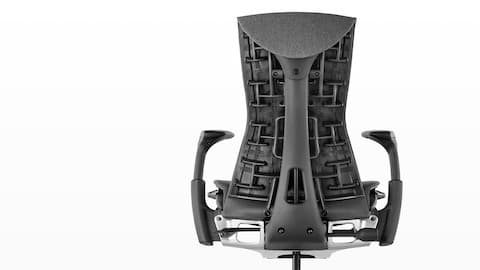
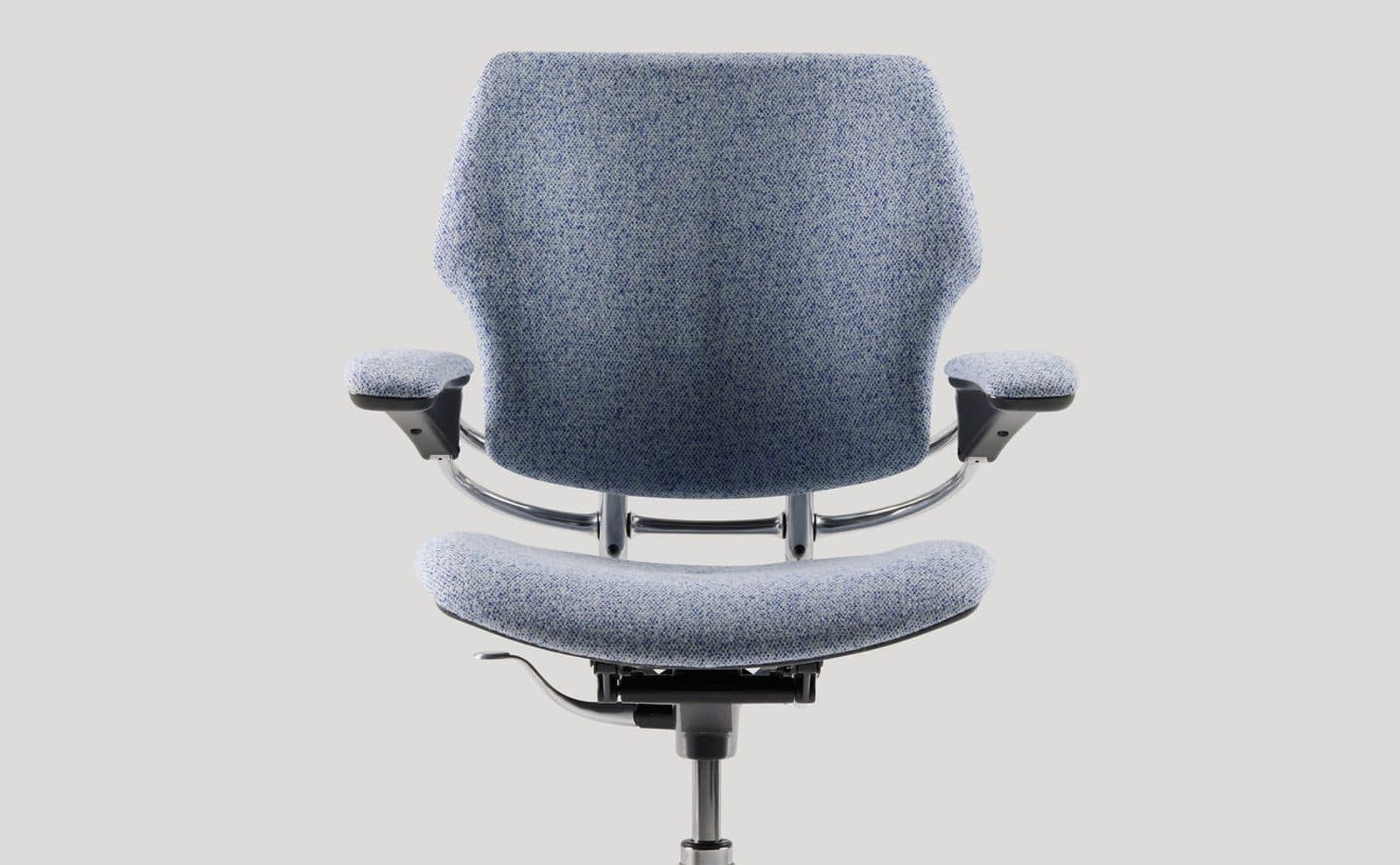
Backfit spine mimics the body's natural curve; pixelated seat and back distribute pressure automatically.
The Verdict.
Gavler Meta-Score
“For someone who sits eight-plus hours a day — especially with a bad back — the Embody earns its premium over the Aeron: the flexing pixelated support and constant micro-movement are something you stop noticing, which is the whole point. But it is not the most adjustable chair at this price, and the skeletal aesthetic isn't for everyone. Buy it if long-haul comfort and spinal support top your list; look at the Aeron or a Steelcase if you want more granular arm and lumbar control or a more conventional look.”
The Gavler Verdict
The Gavler Review.
Herman Miller Embody Review: The Chair Built to Disappear Under You
Most office chairs are built to cushion you. The Herman Miller Embody was built to do something different: keep you moving. Co-designed by Bill Stumpf and Jeff Weber with a team of more than 20 physicians and biomechanical researchers, its "pixelated" seat and back are a matrix of hundreds of small, flexible support points on a central spine that flexes as you shift — spreading pressure and letting air move through the surface instead of trapping heat over a long day. It's a genuinely different engineering approach than the plush padding or stretched mesh most premium chairs default to, and it's why the Embody holds rank 3 on Gavler's Best Office Chairs list with a 9.3, right behind Herman Miller's own Aeron and the Steelcase Gesture.
What it is
At $1,895–$2,045 depending on configuration, the Embody sits at the top end of the ergonomic chair category, aimed specifically at people who sit for very long stretches — the marketing pitch is circulation and micro-movement over static comfort. BTOD.com, an office-furniture retailer and long-term reviewer that tested the Embody as one of more than 40 chairs it brought in for its 2026 best-office-chair rankings, put it plainly: the Embody "ended up snagging a top three spot on that list and it also became my new everyday chair" — replacing a chair the reviewer had used daily for ten years.
In use — what the pixelated support actually feels like
The core idea is that the seat and back shouldn't just cushion you, they should move with you. BTOD's hands-on assessment, after months in the chair, is the most useful evidence on this point: "The seat is large and features a slight contour. There are no hard frame edges... I like the seat because it is not firm, but it does not have a ton of padding. The seat stays cool, but it still feels soft and supportive. I also like that the seat is flexible." In BTOD's office-wide comfort polling across their whole testing team, the Embody's seat scored 77 out of 100 — not the single highest mark they've recorded, but the most consistent, since nobody on their team rated it below 70. That consistency is notable in a category where premium chairs often split opinion sharply.
The backrest is where the design gets most distinctive. Rather than a wide, one-size-fits-all back like most office chairs, the Embody's is deliberately narrow and built to track the spine's natural curve, with a top section that bends for extra flexibility during a full recline. BTOD's writeup captures the mechanism directly: "Like the pixelated seat support, the backrest also has a pixel system. It is designed to act like the human rib cage. It provides flexibility so that it stays supportive as you move while you are working." The independent BackFit adjustment lets you dial in exactly how pronounced that lumbar curve feels — a feature BTOD singled out as a personal favorite: "I am a big fan of independent back angle adjustment. It really allows you to get the backrest at the optimal angle for you to work comfortably." On the recline itself, the comparison BTOD reaches for is telling: "It is similar to the Herman Miller Aeron. I do not think it is quite as smooth as the Aeron, but it is a close 2nd."
Build quality backs up the price. BTOD scored it 89 out of 100 for construction — one of the highest marks the reviewer has given any chair — citing US manufacturing, custom molded aluminum and plastic components, and a genuinely heavy, substantial feel. Gavler's own verified expert quotes echo the same read from other outlets: Creative Bloq calls it a chair that "supports you in all the right places over a long day," and TechGearLab describes "elite ergonomics, a breathable sit, and easy, repeatable adjustments."
Strengths
The pixelated support system is a genuinely different approach, not a marketing label. It's the reason the chair works for such a wide range of body types — BTOD's "scope of users" testing scored the Embody 75/100, among the highest marks the reviewer has given, behind only chairs with higher weight ratings.
A 12-year, no-exclusions warranty rated for 24/7 use is exceptional even at this price tier, and the foam is engineered to match — testing cited by BTOD found it retains roughly 85% of its original thickness after five years of continuous daily use.
It ships fully assembled, arriving ready to use straight out of the box rather than requiring the hour-plus builds common to most premium ergonomic chairs.
Trade-offs — who should skip it
The most consistent criticism, across every source Gavler reviewed, is missing adjustability. BTOD's pros/cons table is blunt: no lumbar adjustment, and no arm pad depth or pivot adjustment — the reviewer specifically noted the fixed arm depth made it hard to rest an elbow near a keyboard tray without repositioning the whole armrest out of the way. TechGearLab's independently verified quote makes the same point: "docked for missing controls rivals include, like arm depth and separate lumbar." If granular, dial-in-everything adjustability matters more to you than the pixelated seat feel, the Steelcase Gesture at rank 2 on this same list includes exactly the controls the Embody skips.
The 300-pound weight rating is also lower than some rivals — the Steelcase Leap and Gesture both support up to 400 pounds, a real consideration for larger users. And the pixelated seat itself is polarizing: some testers in BTOD's own office found they could feel the individual support points more than they'd like, an adjustment period BTOD suggests takes two to three weeks to fully settle into.
How it compares
On Gavler's Best Office Chairs list, the Embody sits at rank 3, behind the Herman Miller Aeron at rank 1 and the Steelcase Gesture at rank 2. The Aeron is the closer sibling comparison — mesh instead of padding, more polarizing seat feel, but a proven decades-long track record. The Gesture is the pick for anyone who wants the Embody's price tier and build quality with more dial-in adjustment.
The Gavler verdict
Score: 9.3/10. For someone who sits eight-plus hours a day — especially with a bad back — the Embody earns its premium: the flexing, pixelated support and constant micro-movement are something you eventually stop noticing entirely, which is the whole point of the design. It is not the most adjustable chair at this price, and the skeletal aesthetic isn't for everyone. Buy it if long-haul comfort and spinal support top your list; look at the Aeron or the Gesture if granular arm and lumbar control matter more to you. See the full list at Best Office Chairs.
Common Questions
For someone who sits eight-plus hours a day, especially with back pain, most long-term reviewers say yes. BTOD.com, which tested the Embody against more than 40 competing chairs, put it in their top three and said the seat flexibility, fit for a wide range of body types, and 12-year warranty make a compelling case despite the price. If you want more granular adjustment — independent lumbar control, arm depth and pivot — for similar money, the Steelcase Gesture is the honest alternative.
The Embody has a padded, four-layer seat rather than the Aeron's stretched mesh, and in BTOD's office-wide comfort polling the Embody actually scored higher for seat comfort (77/100 versus the Aeron's 66/100) — mainly because opinions on the Embody were more consistently positive, while the Aeron's mesh feel is more polarizing. The Embody also has a taller back, a narrower backrest that mimics spinal movement, and the pixelated support matrix; the Aeron does not.
No — this is its most consistently cited drawback. The backrest has a built-in lumbar curve and an independent back-angle adjustment (BackFit), but there is no separate, dedicated lumbar dial the way rivals like the Steelcase Gesture and Leap V2 offer.
Herman Miller backs it with a 12-year, no-exclusions warranty rated for 24/7 use, and the foam is built to hold up over that span — testing cited by BTOD notes the seat foam retains roughly 85% of its original thickness after 5 years of continuous daily use.
Where to Buy.
Prices checked regularly
90-day price history
Price History
Steady at $1,895 for the entire 90-day tracking window — no increases, no discounts, across 91 tracked days.
Tracked daily across retailers. Vote Want itabove and we’ll alert you the moment the price drops.
Some links are affiliate links — Gavler may earn a commission. This never affects rankings or scores. Learn more.
Precision Engineering
Pixelated Support Matrix
Hundreds of flexible support points on a central spine spread pressure and move with you instead of holding you static.
BackFit Spine
Articulating backrest tunes to the user's individual lumbar curve, then arches with you through the recline.
12-Year Warranty
Herman Miller's full long-term warranty with field-serviceable parts; ships fully assembled.
Technical Specifications
The Scoreboard
Particularly recommended for users with back pain. Aesthetic is polarizing.
Cast Your Vote
Do you think Herman Miller Embody deserves the #3 spot in Best Office Chairs?
Global Critique
“There is no perfect chair — but the Embody comes close. It supports you in all the right places over a long day.”
“Elite ergonomics, a breathable sit, and easy, repeatable adjustments — though it's docked for missing controls rivals include, like arm depth and separate lumbar.”
“One of the best chairs for active sitting and back support, with genuinely durable Herman Miller build — but it's a major investment.”
More from Best Office Chairs.
See how other top picks compare in this category.
How to Choose an Office Chair You'll Sit In All Day
A three-minute showroom sit and a racing-chair hero shot are the wrong first question. Mesh classic vs Embody vs budget vs gaming vs leather is the lane. Shop Gavler's live ranking.
Steelcase Series 1 vs Herman Miller Aeron: The $499 Chair vs the $1,795 Benchmark
Steelcase's Best Value pick at $499 vs Herman Miller's twelve-year benchmark at $1,795. Which office chair actually deserves your money in 2026.
The Best Office Chairs in 2026, Ranked by People Who Actually Sit in Them All Day
Herman Miller Aeron, Steelcase Gesture, Branch Ergonomic Chair. Gavler's desk-bound community ranks the office chairs worth sitting in for 8+ hours.