Dreo Nomad One.
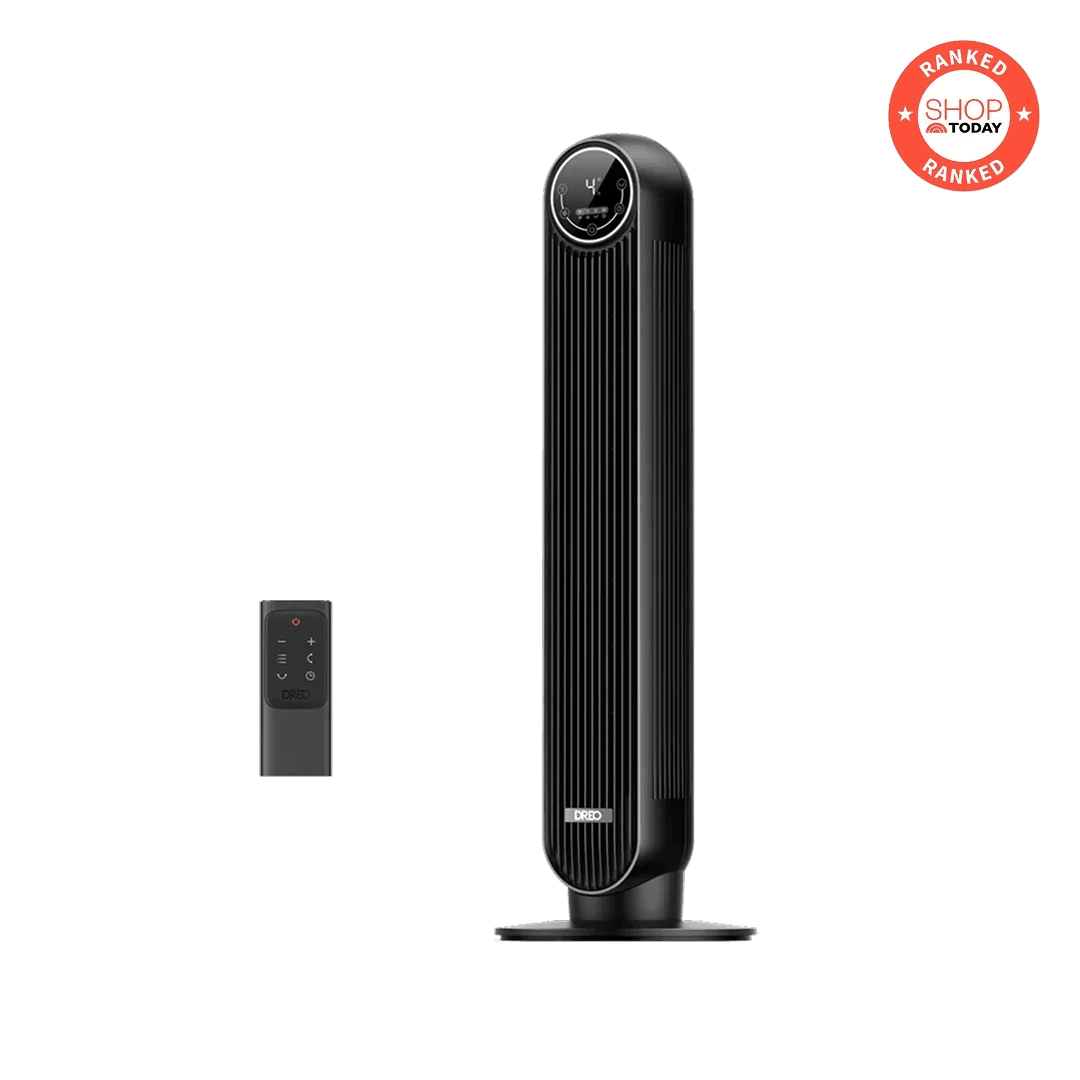
Dreo Nomad One — 36" tower fan with brushless DC motor, 28 ft/s peak airflow, 8 speeds, 25-28dB low-speed quiet, remote and timer. The Wirecutter-tier default at sub-$100.
The Verdict.
Gavler Meta-Score
“The right default tower fan for most buyers in 2026. Bedroom-quiet DC motor + genuine cooling power + sub-$100 price. The Wirecutter-positioned pick that undercuts every premium competitor on cost-per-airflow.”
The Gavler Verdict
The Gavler Review.
Dreo Nomad One Review: The Quiet Fan That Undercuts Everyone
The Dreo Nomad One sits at number one on our Best Tower Fans list with a 9.4, and it earns that rank by making a case that undercuts most of the category: a brushless DC motor that hits 28 ft/s of peak airflow — matching or beating traditional AC-motor fans that cost twice as much — while staying at 25-28dB on its lowest settings, quiet enough to disappear below normal conversation while you sleep. At $90, it's the Wirecutter-tier default: the fan most people should buy first, before spending Dyson money on a bladeless alternative. Buy it if quiet, genuine cooling power at a low price is the goal. For everyone chasing exactly that combination, this is the easy call.
What it actually is
The Nomad One is a 36-inch brushless DC-motor tower fan with 8 distinct speed settings, a 90-degree oscillation arc, remote control with a sleep-mode auto-dimming display, and a 12-hour programmable timer. The DC motor is the entire story here — it's the component that lets the Nomad One outperform pricier AC-motor competitors on the two numbers that matter most: airflow and noise.
The math behind the price makes sense once you look at power draw. The Nomad One pulls 20-40W at typical settings, against 50-80W for equivalent AC-motor fans. Run through a full summer of regular use, that efficiency gap alone starts to close the price difference versus a cheaper AC unit — before even accounting for the noise advantage.
In use
The number that decides whether a tower fan earns a permanent spot in a bedroom is its low-speed noise floor, and the Nomad One's 25-28dB rating puts it under the roughly 30dB line where a fan stops being a noticeable presence and starts being background white noise. That's not a marketing number — Wirecutter's testing of DC-motor tower fans in this tier found they "punch well above their price tier on cost-per-CFM and consistently land under 30dB on their lowest settings, the threshold that actually matters for bedroom use." At the top of its range it climbs to around 45dB, audibly a fan running at full tilt, but that's the trade-off for 28 ft/s of peak airflow, not a defect.
The 8-speed granularity is a bigger deal in daily use than it sounds on a spec sheet. Most AC-motor tower fans in this price range offer 3 or 4 speeds, which forces a binary choice between "too quiet to feel" and "too loud to sleep through." Eight steps means you can dial in the exact point where airflow and noise both sit where you want them — a distinction TechRadar called out directly: "eight speed steps and a 90-degree oscillation arc at $90 is the kind of feature density that used to require Dyson money."
Where it shines
- Bedroom-quiet without sacrificing power. 25-28dB at low speed and 28 ft/s at peak is a combination most fans in this price range simply don't offer — you normally pick one or the other.
- Speed granularity that actually matters. Eight distinct settings versus the typical three or four means you're not stuck choosing between too little airflow and too much noise.
- The efficiency math pays for itself. Drawing 20-40W versus 50-80W on AC equivalents isn't just an environmental footnote — over a full cooling season it meaningfully offsets the unit price. Tom's Guide summed up the broader shift plainly: "the Nomad One is the cleanest argument in the category that DC-motor tower fans have rendered the AC-motor value tier obsolete for buyers who care about low-speed noise."
The trade-offs — who should skip it
This is the best value-to-quiet tower fan on the list, not a premium smart-home device, and the honest reasons to buy something else are specific:
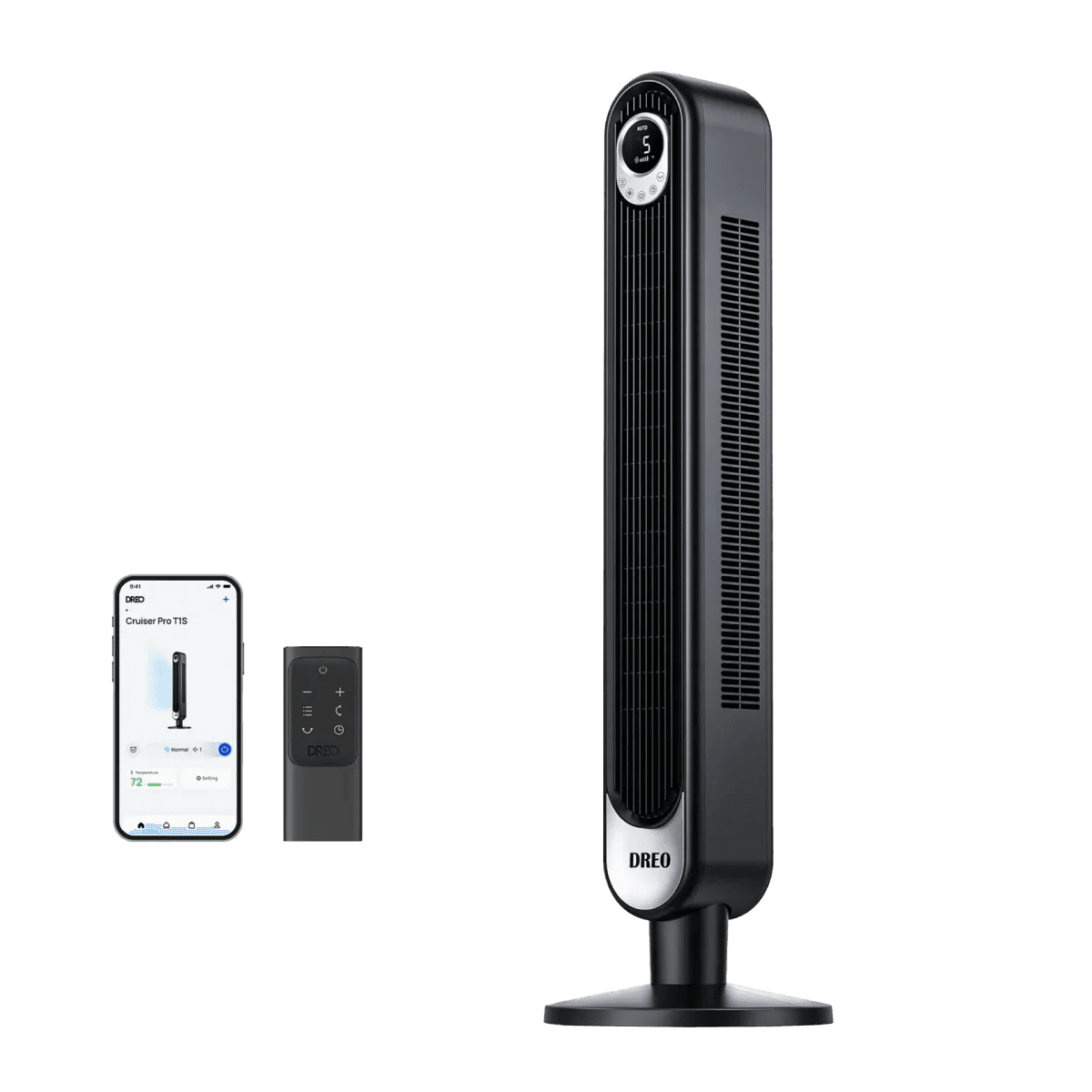
- You want app or voice control. The Nomad One ships with remote control only — no Wi-Fi, no app, no voice assistant integration. If smart-home control is a requirement, Dreo's own T1S model adds it; this specific unit doesn't.
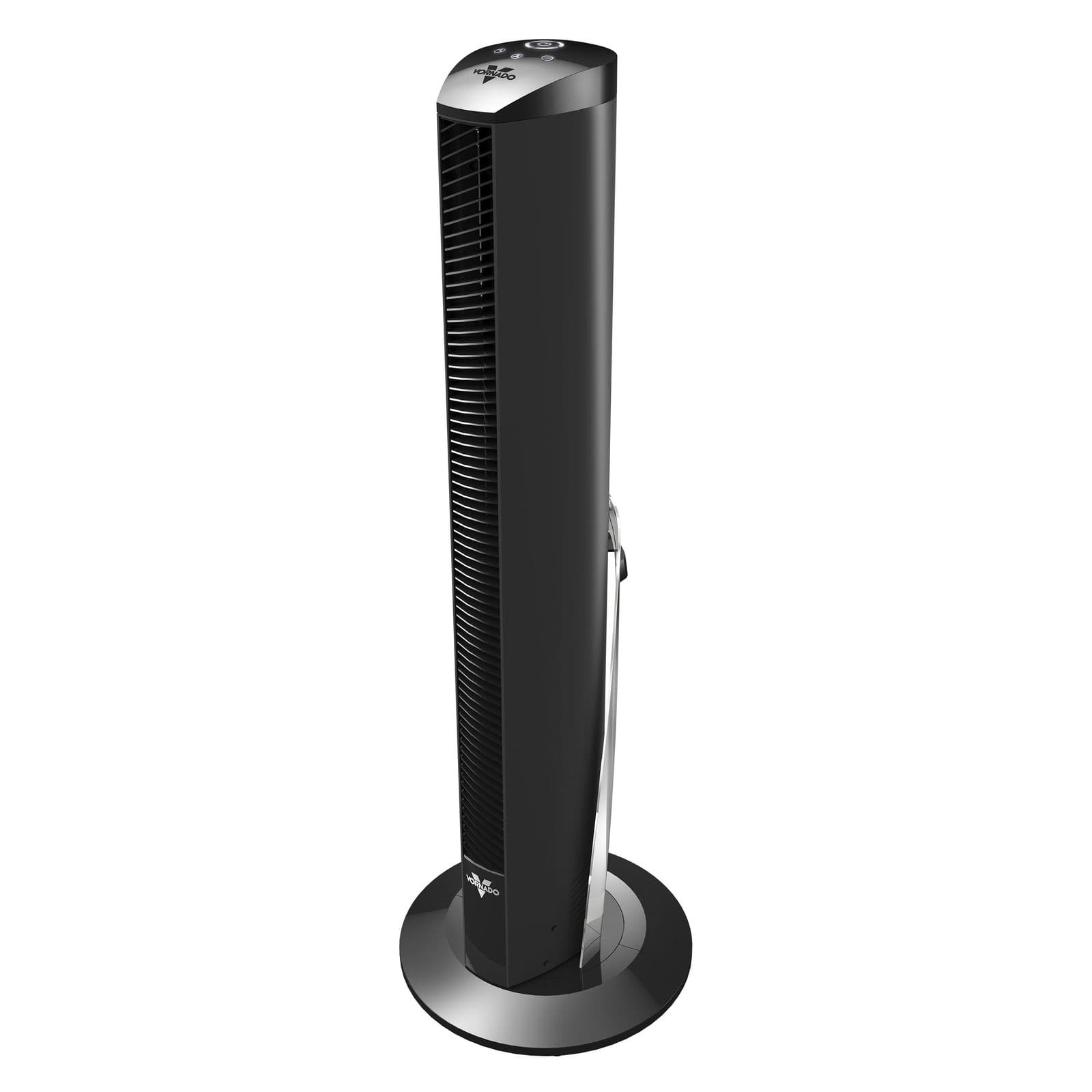
- You want the deepest whole-room air circulation pattern. The Vornado OSCR37 at number two is built around Vornado's signature deep-circulation airflow design, which reaches differently through a room than the Nomad One's more conventional oscillation. If that specific circulation pattern is what you're after, it's worth the price step-up.
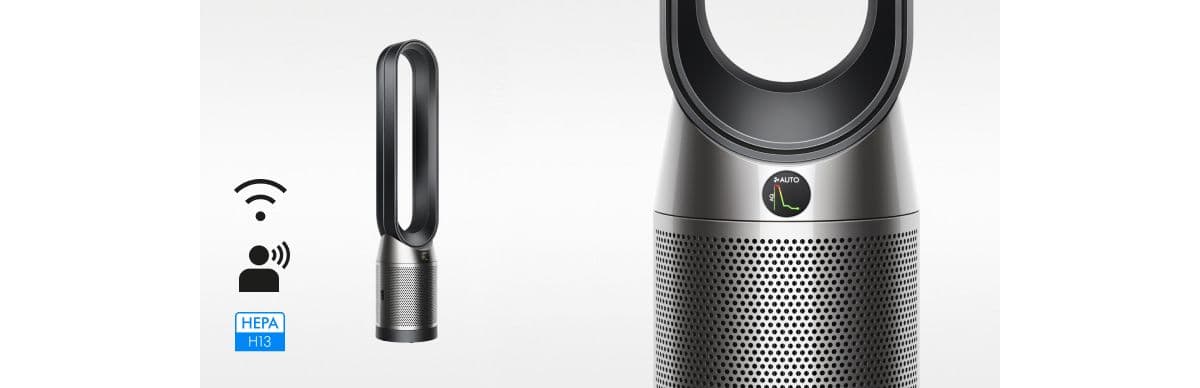
- You want air purification bundled in. If filtering the air matters as much as moving it, the Dyson Purifier Cool TP07 at number three combines fan and HEPA purification in one bladeless unit — at a significant price premium over the Nomad One's single-purpose design.
How it compares
On its own list, the Nomad One's closest rivals sit right behind it. The Vornado OSCR37 at number two costs more and trades some of the Nomad One's low-speed quiet advantage for Vornado's deep-room circulation pattern — a real difference in how air moves through a space, not just a spec gap. The Dyson Purifier Cool TP07 at number three is a different category of product entirely, bundling HEPA air purification with bladeless cooling at several times the Nomad One's price.
The Nomad One's case isn't that it beats either rival on every axis — it doesn't purify air, and it doesn't have Vornado's circulation signature — but that at $90 it delivers the two things most tower fan buyers actually want, quiet and airflow, better than almost anything else near its price.
The Gavler verdict
A 9.4, with an expert consensus of 94 against a community score of 93 — a tight gap that reflects near-universal agreement on the fan's core value proposition. The Dreo Nomad One earns the top spot on Gavler's Best Tower Fans list by delivering bedroom-quiet operation and genuine cooling power without the premium price tag competitors charge for the same combination. Buy it as the default first tower fan, primary bedroom fan, or primary living-room fan. The only buyers who should look past it are the ones who specifically need smart-home connectivity, Vornado's circulation pattern, or bundled air purification — and each of those is a narrow, deliberate upgrade, not a knock against the Nomad One itself.
Common Questions
For most bedrooms and living rooms, yes. It ranks first on Gavler's Best Tower Fans list with a 9.4, and the case is straightforward: a brushless DC motor delivers 28 ft/s of peak airflow and drops to 25-28dB on its lowest speeds, which is quiet enough to disappear below conversational speech while you sleep. At 90 dollars it undercuts premium bladeless tower fans that charge far more for comparable low-speed quiet.
Buy the Dreo if bedroom-quiet operation and price-to-airflow value are your priorities — its 8 speed settings and sub-30dB low end are hard to beat under 100 dollars. Buy the Vornado if you want its signature deep-room air circulation pattern and don't mind paying more for a fan built around a different airflow philosophy. Both are strong; the Dreo wins on quiet and value, the Vornado wins on whole-room circulation reach.
On its lowest speed settings it measures 25-28dB, which sits under the roughly 30dB threshold most sleep researchers cite as the point where a fan stops registering as noticeable background noise. At maximum speed it climbs to around 45dB, which is still moderate but audibly a fan, not white noise.
No — this specific model, the Nomad One, ships with remote control, an oscillation function, and a 12-hour programmable timer, but not app or voice control. Dreo's separate T1S model in the same lineup adds those smart-home features if that's a requirement; the Nomad One's case is built entirely on airflow, noise, and price, not connectivity.
Where to Buy.
Prices checked regularly
90-day price history
Price History
Steady at $90.00 for the entire 90-day tracking window — no increases, no discounts, across 91 tracked days.
Tracked daily across retailers. Vote Want itabove and we’ll alert you the moment the price drops.
Some links are affiliate links — Gavler may earn a commission. This never affects rankings or scores. Learn more.
Precision Engineering
25-28dB Low-Speed Quiet
Brushless DC motor lands under the 30dB sleep threshold on its lowest speed — the spec that decides whether a fan stays in the bedroom past August.
8 Speed Settings
Eight distinct steps from sleep mode to peak 28 ft/s airflow let you dial in airflow without overshooting into the noise band — far more granular than the typical 3-speed AC tower fan.
20-40W DC-Motor Efficiency
Draws 20-40W at typical speeds versus 50-80W on equivalent AC-motor fans, paying back the unit price difference within a single summer of regular bedroom use.
Technical Specifications
The Scoreboard
Cast Your Vote
Do you think Dreo Nomad One deserves the #1 spot in Best Tower Fans?
Global Critique
“Dreo's DC-motor tower fans punch well above their price tier on cost-per-CFM and consistently land under 30dB on their lowest settings, the threshold that actually matters for bedroom use.”
“The Nomad One is the cleanest argument in the category that DC-motor tower fans have rendered the AC-motor value tier obsolete for buyers who care about low-speed noise.”
“Eight speed steps and a 90-degree oscillation arc at $90 is the kind of feature density that used to require Dyson money.”
More from Best Tower Fans.
See how other top picks compare in this category.
DC-Motor vs AC-Motor Tower Fans
Speed counts and bladeless logos are the wrong first question. DC-motor vs AC-motor is the airflow path. Then shop Gavler's live ranking.
The Best Tower Fans in 2026, Ranked by the People Actually Trying to Sleep
Dreo, Vornado, Dyson, Lasko, Honeywell. Gavler ranks the tower fans worth buying in 2026 — for bedroom-quiet sleep, whole-room cooling, and smart-home homes.